
 English
 中文简体
中文简体 русский
 日本語
日本語 Français
 Español
 عربى
عربىen
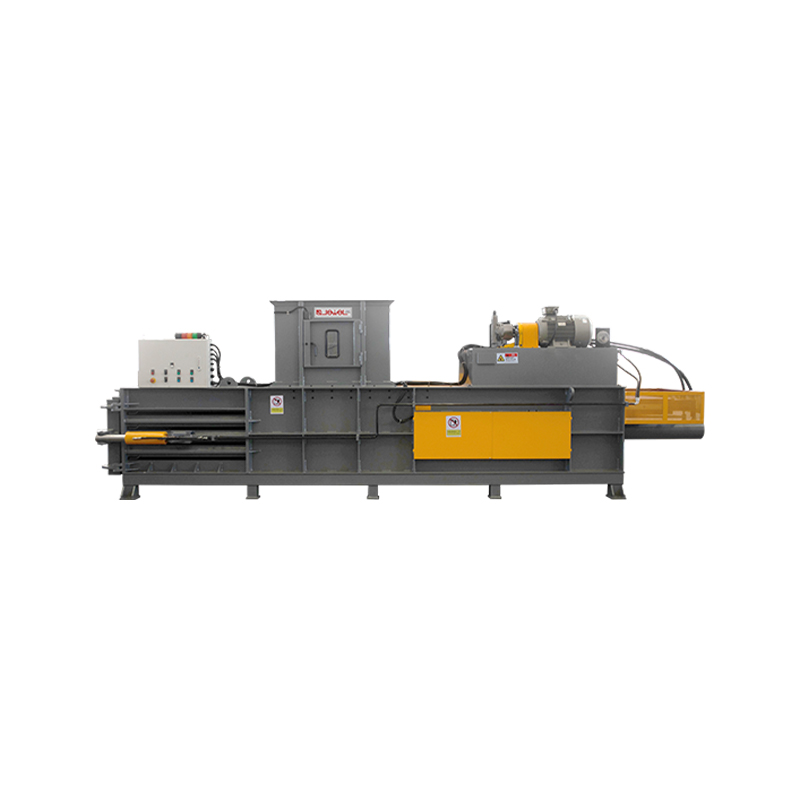
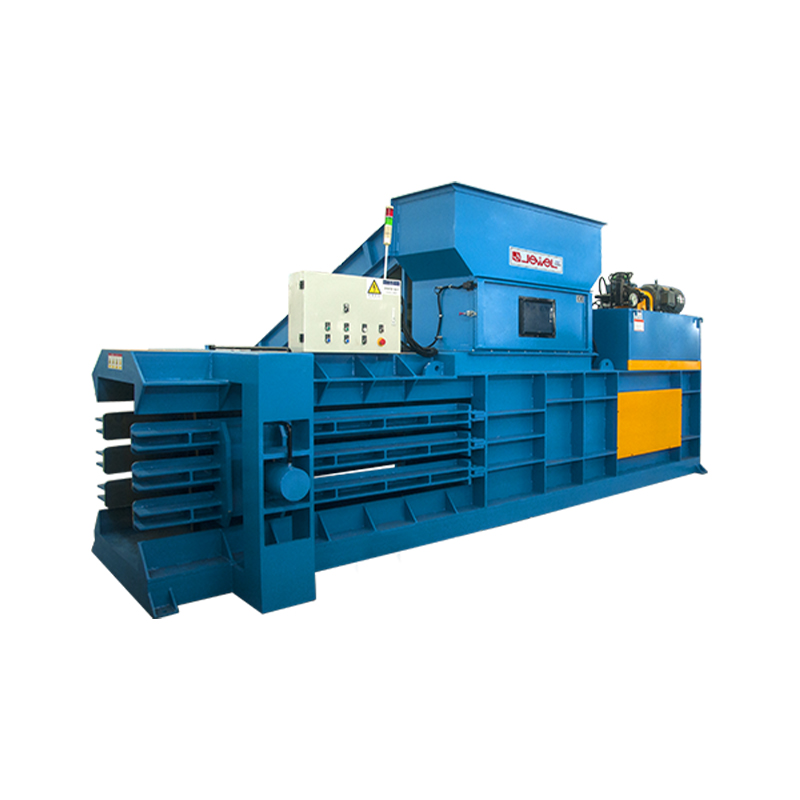
What Is a Vertical Plastic Baler and How Does It Work? If your facility is dealing with growing piles of plastic waste — bottles, film, containers, packaging — ...
READ MORE2026-08-14
Content
A production manager in a corrugated packaging plant recently showed me two photographs. The first was a wall of baled cardboard and plastic film waiting to be loaded onto a truck. The second was a row of open bins overflowing with food-contaminated wrappers, wet paper, and general refuse. His question was the same one we hear almost every week: what is the difference between a baler and a compactor, and which one does the facility actually need?
The short answer is simple: a baler compresses clean, sorted recyclables — cardboard, paper, plastic film, bottles, textiles, and cans — into dense, wire-tied bales that are sold to mills and reclaimers. A compactor pushes mixed, often wet, residual waste into a container that is hauled to a landfill or an incinerator. Both machines use hydraulic force to reduce volume, but they produce completely different outputs. A baler creates a product with resale value. A compactor creates a smaller pile of garbage that still costs you money to remove.
That single difference decides everything else: the materials you can feed in, the tolerance for moisture and contamination, the density you can achieve, the labor required, the safety features, the payback calculation, and the physical size of the machine. Choose based on the output you are trying to create, not on the machine's ability to press things flat.
The rest of this guide compares the two machines in practical terms — how they operate, how their economics differ, and which one fits which waste stream. It also covers the specification errors we see most often as a baler manufacturer, so you can avoid them when evaluating quotes.
The confusion is understandable. In everyday language, "compaction" simply means pressing something together, and a baler certainly compacts recyclables. Both machines are powered by hydraulic cylinders, both are built from heavy steel plate, both need an operator or a conveyor feed, and both reduce the number of times a forklift has to move material around a facility.
When the ram retracts, the two machines go in opposite directions. A baler produces a cube or block of material tied with wire or strap, dense enough to be stacked, weighed, and shipped as a commodity. A compactor produces a container full of loose, compressed trash that still has to be disposed of as waste. One output feeds a recycling market; the other feeds a disposal bill.
| Comparison point | Baler | Compactor |
|---|---|---|
| Primary input | Clean, sorted recyclables | Mixed residual waste, including food-contaminated material |
| Material condition | Dry or low moisture | Moisture-tolerant by design |
| Output form | Wire-tied bales of 60–1,200 kg each | Loose compressed trash inside a container |
| Where the output goes | Sold to paper mills, plastic reclaimers, or metal processors | Landfill, incinerator, or transfer station |
| Economic result | Revenue from bales plus avoided disposal cost | Disposal cost only, but with fewer pickups |
| Typical volume reduction | 5:1 to 10:1 | 3:1 to 5:1 |
| Contamination tolerance | Very low in most recycling markets | High — handling contamination is the purpose |
| Typical machine types | Vertical, semi-automatic horizontal, fully automatic horizontal | Stationary compactor, self-contained compactor |
Notice the word "clean" in the first row. It is the most violated requirement in real operations and the main reason balers jam, produce rejected bales, and frustrate operators. If the material arriving at the machine is mixed garbage, a baler is the wrong tool no matter how powerful the hydraulic system is.
A baler compresses recyclable material into a dense block, ties it with wire or strap, and pushes the finished bale out for storage and sale. The bale has to satisfy two conditions at once: it must be dense enough to make trucking economical, and it must be clean enough for the buyer to accept it.
In a vertical baler, material is loaded into a top hopper, the ram presses it down into a bale chamber, and the operator repeats the cycle until the bale reaches the target weight. Vertical bales typically weigh between 60 kg for small office models and 800 kg for large dual-cylinder machines, with densities of 250 to 450 kg/m³ depending on the material. In a horizontal baler, material is pushed into a compression chamber and the ram cycles automatically. Bales are formed and ejected continuously, usually weighing from 200 to 1,200 kg, with densities of 400 to 550 kg/m³ for OCC and higher for certain plastics.
Density is not a marketing number — it drives freight economics. A truck can carry only a fixed volume of bales; below a certain density, the load becomes uneconomical to transport, and mills apply penalties or reject it. We always advise customers to confirm the density requirement with their end buyer before selecting a model, because the buyer's specification sets the minimum performance of the machine.
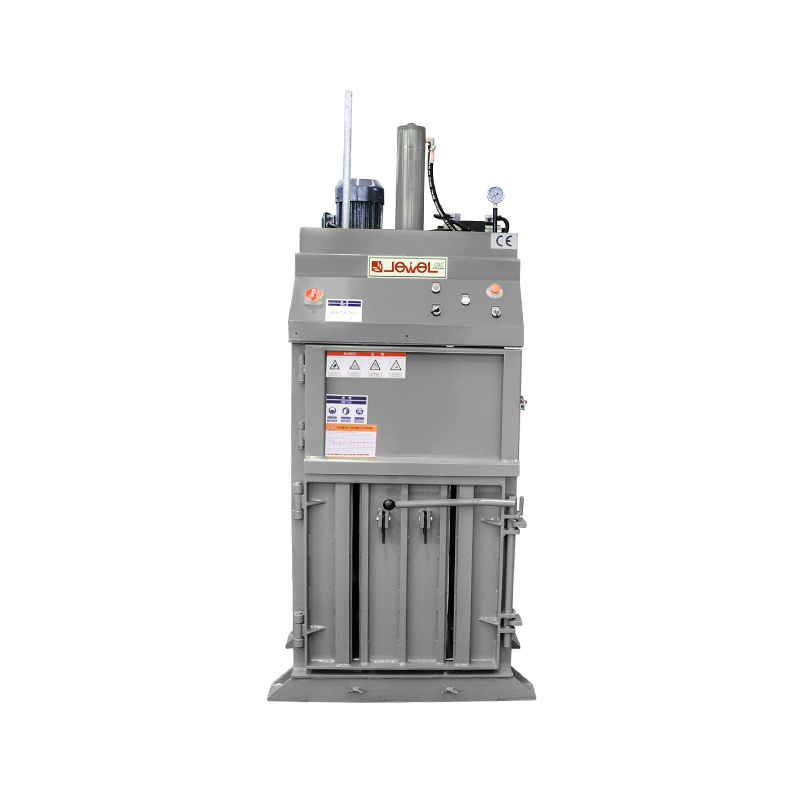
For volumes below roughly 10 to 15 tons per week and for buildings with standard 3-meter ceilings, a vertical baler is usually the right starting point. It has a smaller footprint, a lower purchase price, and simpler operation. For a facility producing a few tons of recyclables per day, a medium-sized vertical hydraulic baler offers a practical middle ground: enough pressing force for dense, saleable bales without the floor space or capital cost of a horizontal line.
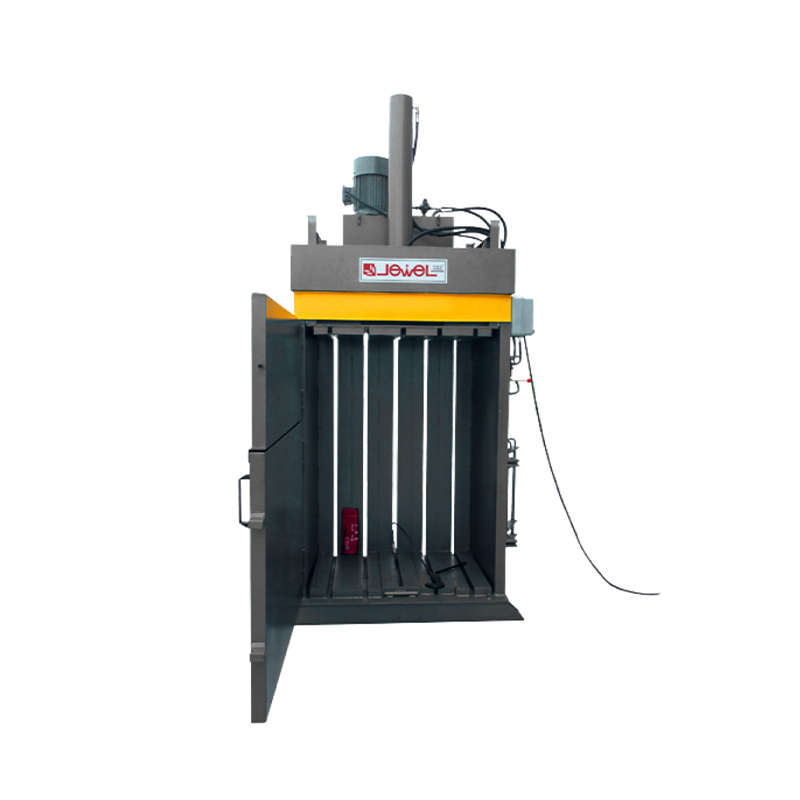 OEM/ODM Medium-Sized Vertical Hydraulic Baler Factory, Manufacturers - Shanghai Shanghai Jewel Tech Co.,Ltd is China OEM/ODM Medium-Sized Vertical Hydraulic Baler manufacturers and factory,It is suitable for the recyc...View Product →
When volume grows beyond what an operator can feed manually, a semi-automatic horizontal baler keeps the operator loading a conveyor while the ram cycles by itself. For round-the-clock production lines, a fully automatic horizontal baler with an automatic tying mechanism removes manual tying completely and becomes part of the waste handling line.
Typical OCC bale density by machine type
Densities are typical for OCC on hydraulic equipment; actual results depend on moisture, feed rate, and press force.
None of these materials should go into a baler if they are heavily contaminated with food, liquids, or inert debris. A low percentage of contamination is negotiable in some markets; beyond that, the load is treated as waste and the machine starts suffering from corrosion, blocked filters, and tie failures.
| Material | Typical bale density | Practical notes |
|---|---|---|
| OCC (corrugated cardboard) | 350–550 kg/m³ | Density target usually set by the paper mill buyer |
| Mixed paper | 400–500 kg/m³ | Sensitive to moisture and non-paper content |
| Plastic film | 250–450 kg/m³ | Needs clean, dry film; shredded film bales denser |
| PET bottles | 300–450 kg/m³ | Drained bottles bale more evenly and heavier |
| Textiles and fiber | 250–350 kg/m³ | Varies with fiber type and garment structure |
A compactor takes unsorted waste and squeezes it into a connected container, which reduces the number of trips the waste hauler has to make. The two most common layouts are a stationary compactor, which sits on a concrete pad and loads into a separate roll-off container, and a self-contained compactor, which combines the ram and the container in one sealed body. The self-contained version is the better choice for wet waste, because the liquid stays inside the unit and does not leak across the loading dock.
Compactors are the right tool for the material a baler must refuse: food waste, wet packaging, sanitary waste, mixed municipal-type trash, and light construction debris. None of these can be tied into bales, and none will be bought by a mill or a reclaimer. The only economic question is how many truck trips you can eliminate.
Moisture is the key distinction. Wet cardboard in a baler creates leachate, foul odors, and rejected bales. A compactor is designed to handle that moisture; sealed bodies and drain valves are standard features on self-contained models.
Relative volume of one ton of material after processing
Compaction ratio for general mixed waste is typically 3:1 to 5:1; baled recyclables reach higher reduction because the material is dry and compressible.
The exact ratio depends on the waste. Light packaging compacts easily and can reach 5:1. Rigid or dense waste may only reach 3:1. Either way, the real saving is in hauling frequency and dock labor, not just density.
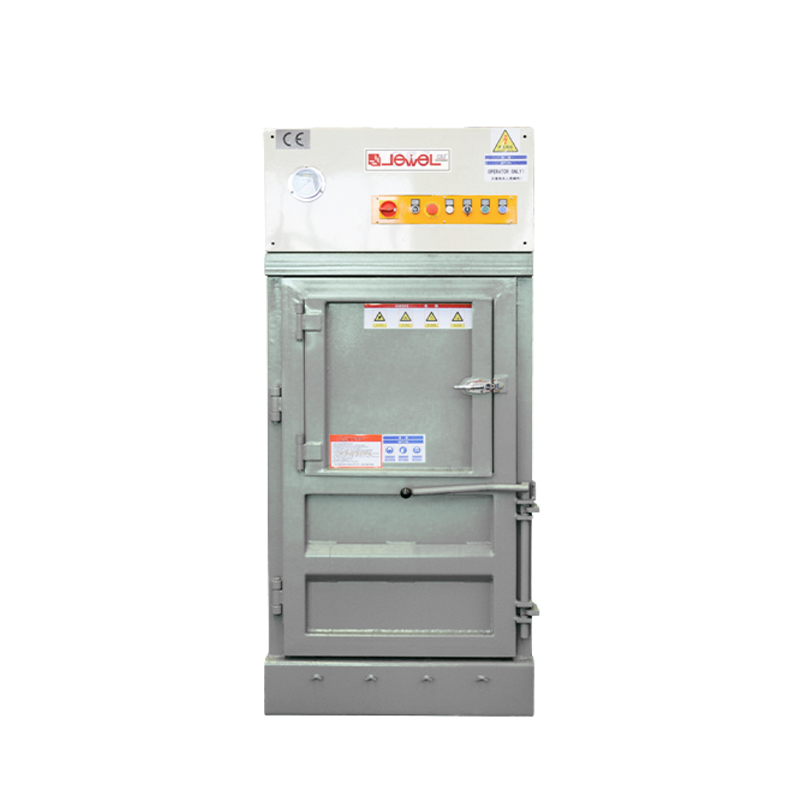
Facilities that want compactor behavior without a permanent construction project — no concrete pit, no electrical trench — are often better served by a smaller self-contained unit. Our intelligent compression trash bin works the same way as a self-contained compactor but fits through standard doorways and operates on a single electrical supply. It is popular where waste output is measured in cubic meters per day rather than tons per day.
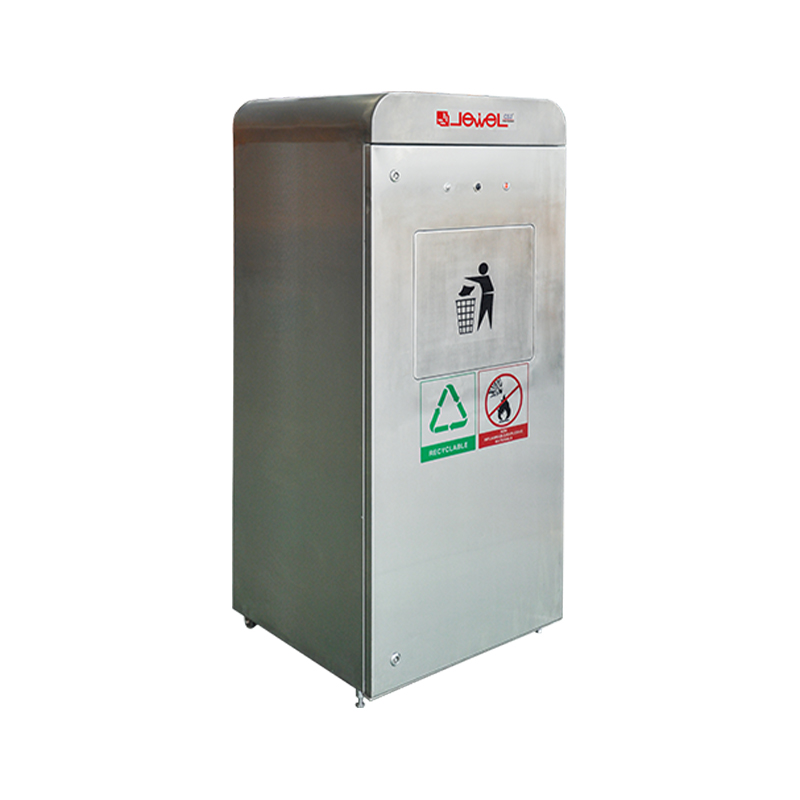 OEM/ODM Intelligent Compression Trash Bin Factory, Manufacturers - Shanghai JeweShanghai Jewel Tech Co.,Ltd is China OEM/ODM Intelligent Compression Trash Bin manufacturers and factory,Scope of application: Garbage ge...View Product →
A compactor will not make waste disappear and will not turn it into revenue. It can cut disposal volume by 60 to 80 percent and reduce pickups from several per week to one, but every cubic meter that leaves the building is still charged as waste. If a large share of your volume is clean recyclable material, a compactor alone leaves money on the table.
Once the material question is settled, the next difference is financial. A baler has two effects on cash flow: it avoids the hauling cost of loose recyclables and it generates revenue from selling the bales. A compactor has one effect: fewer hauling trips. Both are valid savings, but the payback profile and the risk are different.
A baler pays for itself fastest when disposal prices are high and the recyclable stream is clean enough to sell. Consider a facility producing 20 tons of material per month — 15 tons of clean OCC and plastic, plus 5 tons of residual trash. With loose bins, the hauler makes 24 pickups per month. A compactor alone cuts this to 8 pickups. A baler for the recyclables plus a small compactor for the residue reduces the residual stream to 4 pickups per month, and the bales bring in revenue.
| Cost item | Loose bins | Compactor only | Baler + residual compactor |
|---|---|---|---|
| Hauler pickups per month | 24 | 8 | 4 |
| Monthly hauling cost | $3,600 | $1,200 | $600 |
| Bale revenue credit (15 t at $60/t) | $0 | $0 | -$900 |
| Net monthly cost after revenue | $3,600 | $1,200 | -$300 (net income) |
In this illustration, the compactor alone cuts the disposal bill by two thirds, which is a solid result on its own. Adding a baler changes the picture in a different way: the revenue from the bales covers the remaining disposal cost and leaves a small surplus. Real prices for OCC fluctuate, and the surplus can shrink or grow with the market, but the structural point remains: baled recyclables leave the building as goods, not garbage.
A compactor is the correct financial choice when the waste stream is genuinely mixed, wet, or contaminated, because there is no revenue alternative. The payback comes from fewer pickups, lower per-ton hauling rates for compacted containers, and less manual handling. It is also usually the lower-investment option, which matters when capital is limited and the material has no resale market.
The rule we repeat to customers is simple: if the material can be sold, bale it; if it must be disposed of, compact it. Mixing the two streams is how facilities end up with the wrong machine.
Illustrative hauler pickups per month for 20 t of total waste
Fewer pickups mean lower hauling charges and less dock space occupied by full containers.
Here is a decision framework based on the differences above. It starts with the waste stream, not with the machine.
If you generate more than 5 tons per month of OCC, mixed paper, or print-room waste, start with a vertical baler. Above 15 tons per week, move to a horizontal line.
Plastic shrink film, stretch wrap, PET, and HDPE with low contamination belong in a baler. Add a shredder if the film arrives as long, tangled pieces that bridge across the hopper.
Supermarket back rooms, canteen waste, and sanitary waste belong in a compactor or a compression bin. Feeding them to a baler creates rejected bales and accelerates machine wear.
A small vertical baler fits through standard doors and needs about 2.4–2.6 m of ceiling height. For trash, choose a compact self-contained unit rather than a large stationary compactor.
Printing plants, material recovery facilities, and e-commerce warehouses running all day need a fully automatic horizontal baler with auto-tying, so the machine keeps up with the production line.
When the audit points to both a baler and a compactor, it is usually because the facility has two streams in one room. A common layout is a baler for OCC and plastic, plus a small compactor or compression bin for the remaining 20 to 30 percent of unrecyclable residue. The combined investment is often smaller than expected and the payback is faster than either machine alone.
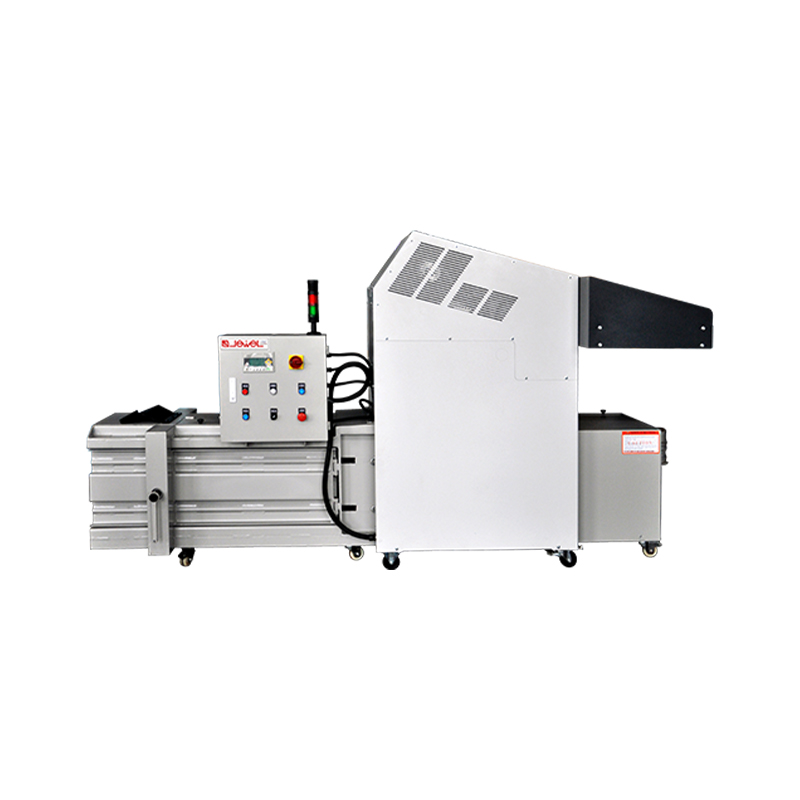
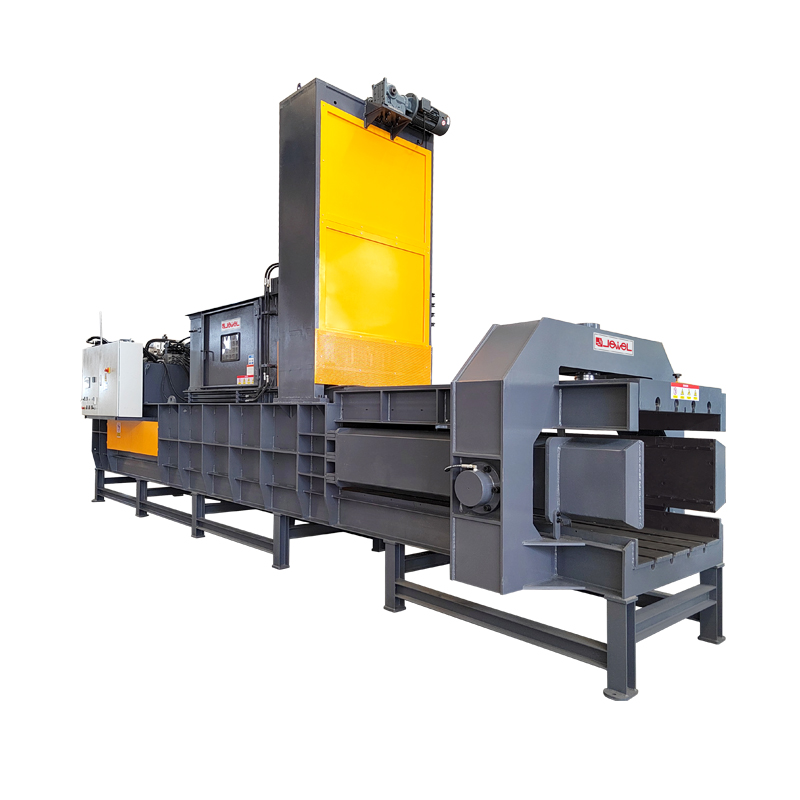
For the main recyclable stream in a medium to large facility, a medium fully automatic horizontal baler is often the best throughput match: it produces continuous bales, keeps the work area clear, and frees operators for other tasks.
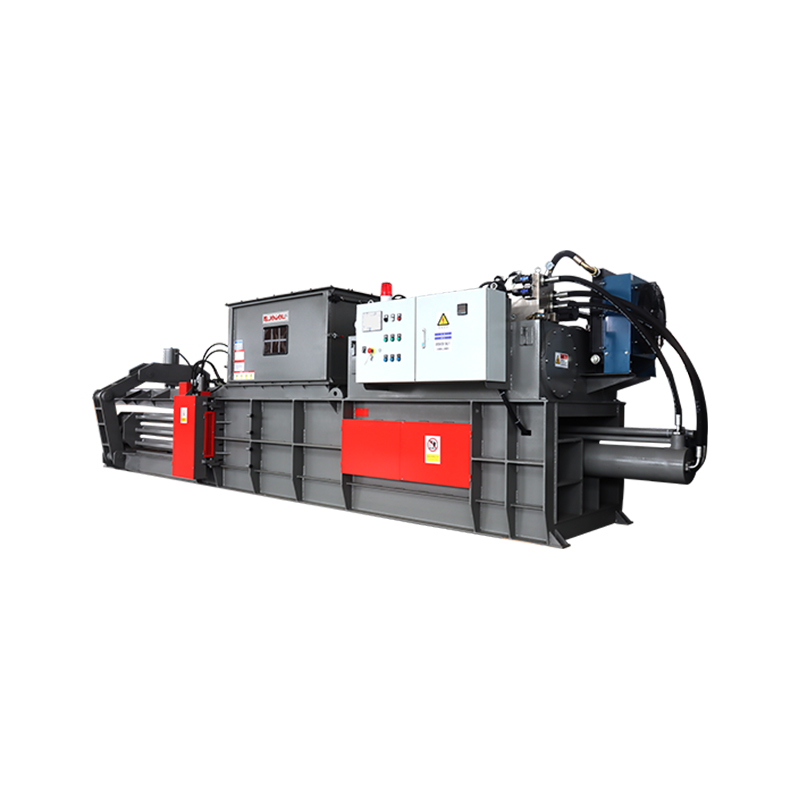 OEM/ODM Medium Horizontal Fully Automatic Compression Baler Factory, ManufactureShanghai Jewel Tech Co.,Ltd is China OEM/ODM Medium Horizontal Fully Automatic Compression Baler manufacturers and factory,The horizontal...View Product →
As a manufacturer of hydraulic baling equipment, we see the same decision errors on site visits. The most common is buying a machine that is one size too small: the business grows, the bale cycle becomes the bottleneck, and the machine is replaced within two years. The second is ignoring the density requirement of the end buyer. The third is assuming a compactor can do a baler's job, or the opposite.
CE compliance matters not because of paperwork but because it proves the machine's safety circuit and steel structure were reviewed against recognized standards. Our CE product certification covers the main baler ranges we export, and we can provide the certificate for the specific model under evaluation.
Site conditions are just as important as power and price. Doorway height, floor load, and maintenance clearance decide whether the machine can be installed at all. Operators and maintenance staff need real training, not a video link. We also see customers who assume that a higher bale density is always better; in practice, over-compressing certain materials can cause springback, stuck bales, and unnecessary energy use. Our industry guide on whether a higher compression density is always better for waste bales explains when more force helps and when it only adds cost.
Finally, visit installations instead of reading brochures. Our project cases across Europe, North America, and other regions list the machine type, the material processed, and the throughput of each site, which gives a more honest comparison than any specification sheet.
All of these are visible in the first week of operation, and none of them is cheap to fix after delivery.
Technically yes, but the resulting bale has no buyer, and moisture plus contamination will damage the machine over time. If the stream is mixed, use a compactor for the residual fraction and keep the baler for the clean recyclable share.
For clean recyclables, a baler gives the lower net cost because the material has value. For residual trash, a compactor gives the lower cost per ton because it reduces pickups. The answer is set by the material, not by the machine brand.
In practice it should not be. Wet fiber loses its market value, adds unnecessary weight to the bale, and produces leachate that corrodes the press and creates a hygiene problem on the floor. Dry it first or feed it to a compactor.
Most facilities above a certain volume do. A common arrangement pairs a baler for OCC and plastic with a small compactor for the 20 to 30 percent of unrecyclable residue. The combined payback is usually better than either machine alone.
The basics are the same: hydraulic oil level, filters, hoses, ram seals, and the tie mechanism. Frequency is different. A fully automatic horizontal baler cycles many times per hour and needs weekly checks, while a lightly used vertical baler can be serviced monthly. Keep spare seals and filters on site.
A small vertical baler fits in roughly 1.5 x 1.2 m with a ceiling height of 2.4–2.6 m. A semi-automatic horizontal line needs around 8–10 m of length, plus room for bale removal. A self-contained compactor takes about the same footprint as a large roll-off container. Confirm doorway height, floor load, and turning radius before ordering.
The baler-versus-compactor decision is really a material-stream decision. Sort the waste, weigh each fraction, check what your local buyer will accept, and only then choose the machine. If you are unsure, a direct conversation with an equipment factory is the fastest way to get a realistic answer. We are glad to review your material, site drawings, and daily volumes, and to recommend a layout that fits both the building and the budget. A machine that matches the waste stream is the only machine that will earn its keep.
Recommended products
What Is a Vertical Plastic Baler and How Does It Work? If your facility is dealing with growing piles of plastic waste — bottles, film, containers, packaging — ...
READ MOREIn the context of the global circular economy and efficient industrial waste utilization, metal resource recycling demands higher equipment performance. Whether...
READ MOREAgainst the backdrop of resource recycling and industrial emission reduction, efficient material compaction technology has become an indispensable link in many ...
READ MOREIn modern industrial waste management, volume reduction and density enhancement are key to efficient transport and resource circulation. As industrial productio...
READ MOREIn industrial manufacturing, material recycling, and urban waste management systems, solid waste volume reduction and resource utilization are core links to red...
READ MOREINDUSTRY GUIDE Waste Compression and Material Handling What Is a Horizontal Baler and Which Type Fits Your Material? Horizontal balers compress large volumes...
READ MORE
Waste Types
Categories
 Custom Baling Press Machine Manufacturers